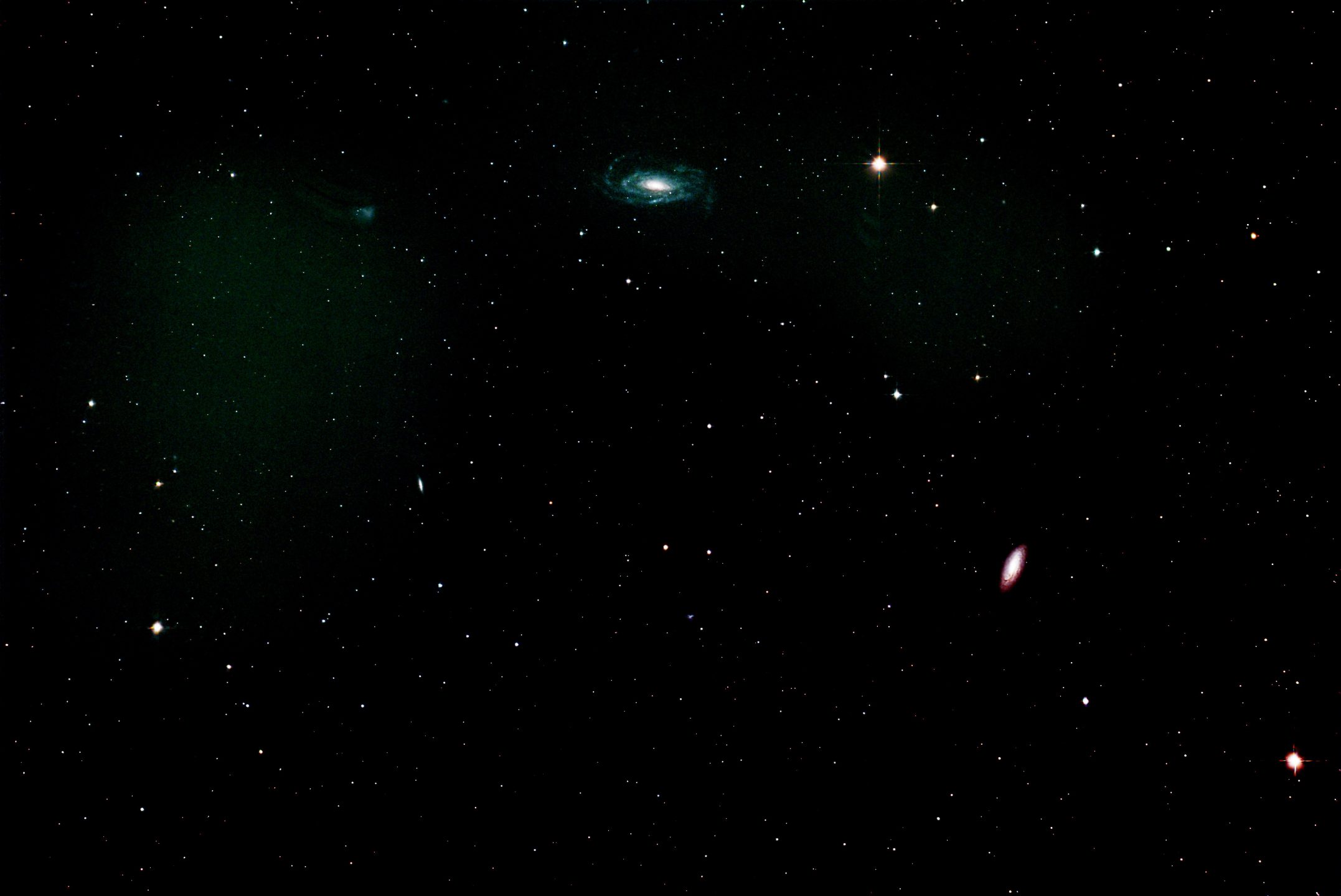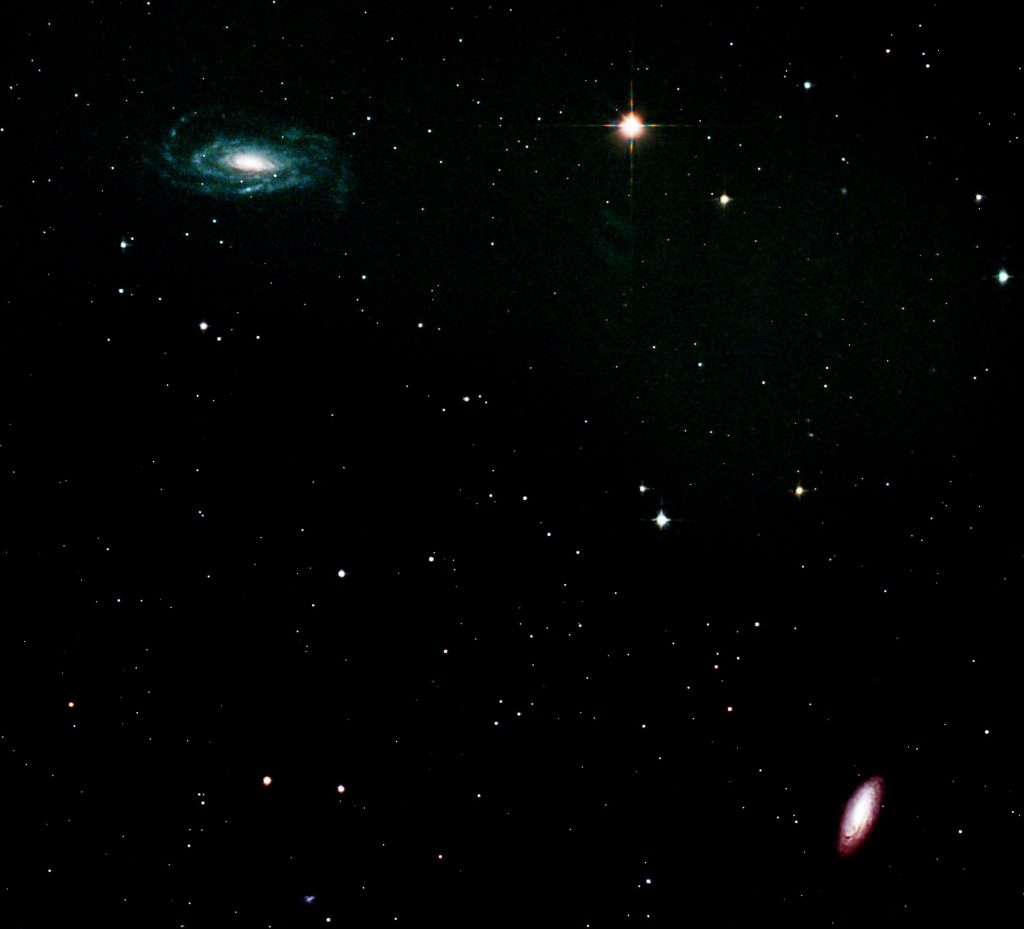
NGC 5033 is an inclined spiral galaxy located in the constellation Canes Venatici. It was discovered by German-British astronomer William Herschel on 1 May 1785. NGC 5033 has a very bright nucleus and a relatively faint disk. Significant warping is visible in the southern half of the disk. The galaxy’s relatively large angular size and relatively high surface brightness make it an object that can be viewed and imaged by amateur astronomers. The galaxy’s location relatively near Earth and its active galactic nucleus make it a commonly studied object for professional astronomers.
Also imaged in this session was NGC 5005, also known as Caldwell 29, is an inclined spiral galaxy in the constellation Canes Venatici. It was discovered by German-British astronomer William Herschel on 1 May 1785. The galaxy has a relatively bright nucleus and a bright disk that contains multiple dust lanes. The galaxy’s high surface brightness makes it an object that is visible to amateur astronomers using large amateur telescopes.
Object Designations: NGC 5033 with NGC 5005
Also known as: (none)
Constellation: Canes Venatici
Object Type: spiral galaxy
Distance: 53 million light-years away
Magnitude: 7.3
Discovery: Charles Messier
Telescope: Apertura CarbonStar 200 Imaging Newtonian 800mm / F4
Camera: ZWO ASI2600 MC Pro – No Filter
Mount: Celestron AVX – With CPWI Software
Guiding: Apertura 32mm Guide Scope with a ZWO ASI120MM Camera and PHD2
SharpCap Imaging Software
Processing Software
AstroSharp Ltd SharpCap
Pleiades Astrophoto PixInsight
GraXpert
Russell Croman Astrophotography BlurXTerminator
Russell Croman Astrophotography NoiseXTerminator
Russell Croman Astrophotography StarXTerminator
Various scripts
This final image is:
36 – 180 second subs at 100 gain, no filter
White Bal (B) = 59
White Bal (R )= 99
Brightness = 12
Camera Temperature = -18
LastPlateSolveData=Plate solve result was RA=13:05:42.7,Dec=+36:54:12 with mount at RA=13:05:43.1,Dec=+36:54:12, FOV 1.758×1.175 degrees, up is 89.30 degrees East of North